
Layered Lighting: How to Create a Warm Ambience Without Overhead Lights

If there is one hill I am willing to die on as an interior stylist, it is this: the central ceiling light—affectionately known in the design community as “The Big Light”—is the ultimate mood killer.
We’ve all experienced it. You come home after a long, exhausting day, looking forward to unwinding with a warm mug of tea or a favorite book, and you flip the main wall switch. Instantly, the room is flooded with a harsh, glaring, hospital-like white glare that exposes every flaw, flattens your furniture, washes out rich textures, and leaves you feeling strangely agitated and alert.
When I first started styling spaces, I realized that true warmth in a home doesn’t come from your furniture, your rugs, or your paint color alone—it comes from how you cast light across those surfaces. Light shapes how we feel, how long we linger in a room, and how deeply our nervous system can reset after a chaotic day.
If you want your living room to feel like a soothing, elevated sanctuary when the sun goes down, it’s time to completely banish the big light and master the art of layered lighting. Here is my field-tested, comprehensive guide to creating pockets of warm ambient glow in every corner of your home.
The Golden Rule of Interior Styling: Understanding the 3 Lighting Layers
To build an inviting, dimensional atmosphere, you must stop thinking of lighting as a single utility meant to illuminate an entire room at once. Professional interior designers build lighting schemes like a chef builds flavor—by layering distinct elements that perform specific roles.
When these three layers work together, they eliminate harsh contrast, soften sharp room boundaries, and transform even the most modest apartment into an inviting space with rich visual texture.
1. The Physics of Atmosphere: The “2700K Rule” & Lumens
Before you spend a single dollar on a new lamp or vintage sconce, we need to address the most common mistake people make: choosing the wrong light bulbs. You can style a room with the most gorgeous ceramic lamp, but if you screw in a high-kelvin, cool-white bulb, the room will still feel cold and clinical.
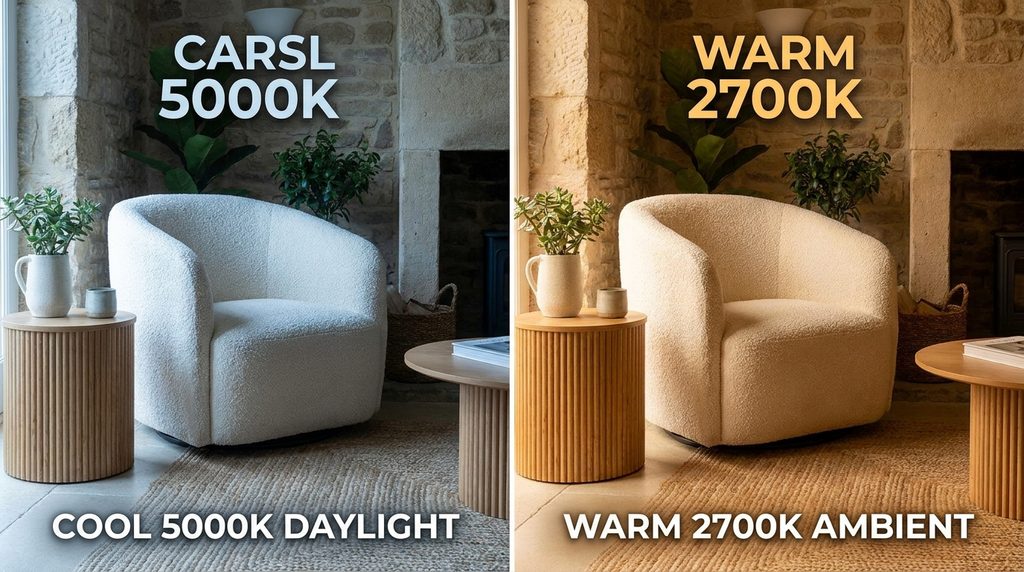
Light bulb properties break down into two key metrics: Kelvins (Color Temperature) and Lumens (Brightness).
Understanding Kelvins (Color Temperature)
- 5000K–6500K (Daylight / Cool White): Ideal for operating rooms, commercial kitchens, and workshops. This light suppresses melatonin, signals your brain that it is mid-day, and creates a sterile atmosphere in residential spaces.
- 3000K–3500K (Neutral White): Common in retail spaces or modern offices. It offers crisp visibility but lacks the psychological warmth needed for evening relaxation.
- 2700K (Warm White): The absolute gold standard for cozy home interiors. It perfectly captures the golden, mellow light of late afternoon and works beautifully with natural wood, linen, and warm greige walls.
- 2200K–2400K (Amber Glow / Candlelight): Designed for intimate accent lighting, bedtime reading lamps, and exposed filament Edison bulbs.
Lumens: Lowering the Intensity
When ditching ceiling lights, you don’t need a single fixture to emit 1,000+ lumens. Instead, distribute light through multiple lower-wattage sources (300 to 450 lumens per lamp). Four soft lights spread across a room create a far more relaxing environment than one blaring bulb.
Elena’s Bulb Shopping Checklist:
- Look for 2700K LED bulbs with a High CRI (Color Rendering Index) of 90+ so your furniture colors look rich and true.
- Choose frosted or matte glass bulbs over clear ones for lamps with visible bulbs to prevent direct glare.
- Invest in smart bulbs or plug-in dimmer switches so you can dial down the brightness as night progresses.
2. Floor Lamps: Anchoring Dark Room Corners
Corners are the most underutilized real estate in interior design. When dusk falls, unlit corners collapse inward, making a room feel visually smaller and boxy. A thoughtfully positioned floor lamp anchors dark corners, brings light up to eye level, and expands the perceived boundary of your living space.
Choosing the Right Silhouette for Your Layout
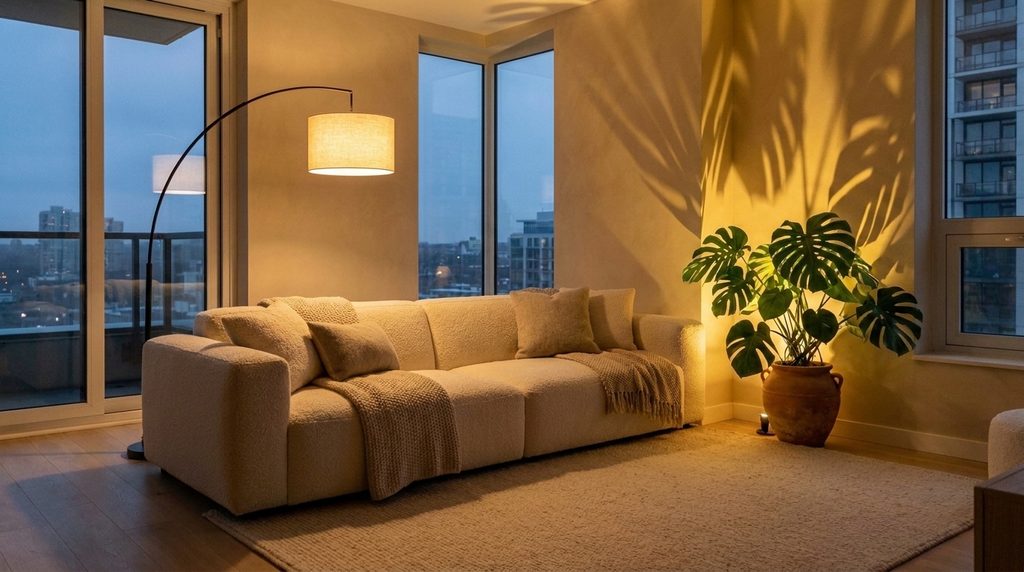
- Arc Floor Lamps: Featuring a dramatic curved arm, these are ideal behind an armchair or draped over a sectional sofa. Look for shades crafted from pleated linen, frosted opal glass, or woven rattan to diffuse the light into a soft halo.
- Uplighter / Torchier Lamps: Directing light upward toward the ceiling allows it to bounce back down into the room as a soft, shadowless glow. This technique works wonders in rooms with low ceilings.
- Tripod & Sculptural Base Lamps: Perfect for filling wide empty corners while serving as a statement art piece during daylight hours.
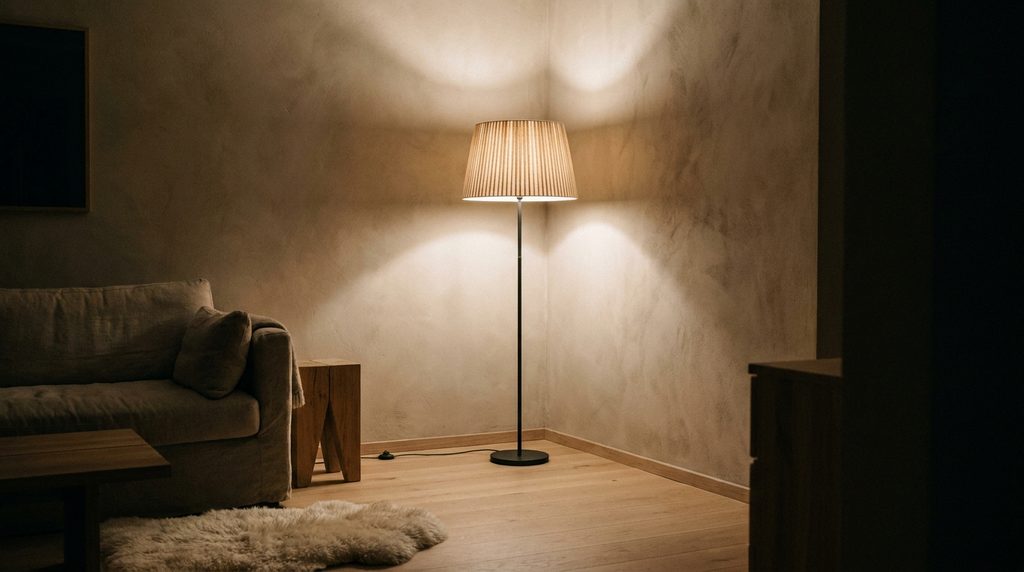
Proportion Tip: Ensure the bottom of the floor lamp shade sits roughly at eye level when you are seated (around 38–42 inches from the floor) to avoid looking directly into an exposed bulb.
3. Table Lamps: Creating Soft “Pockets” of Cozy Light
Table lamps are the heart and soul of cozy interior styling. Rather than trying to illuminate an entire room uniformly, table lamps create inviting pools or “islands” of light that naturally draw people in.
The Asymmetrical Triangle Placement Method
Never line up your lamps in a rigid, straight line across a room. Instead, arrange your floor lamp, table lamps, and accent lights in a staggered triangle. This guides the eye smoothly through the room, adding depth and visual balance.
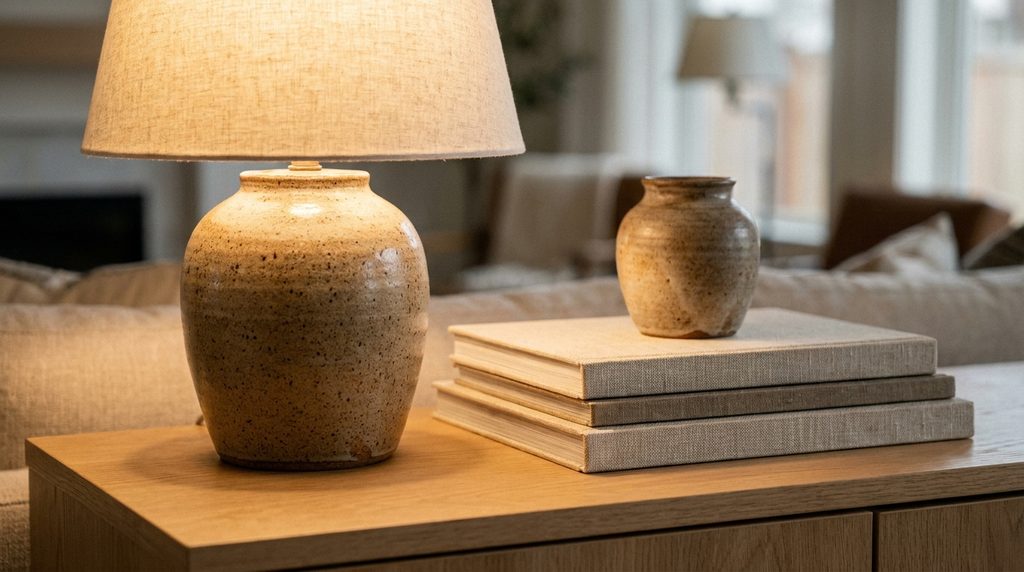
Materiality & Shade Selection
- Linen & Woven Paper Shades: Fabric shades act as physical filters, softening harsh light into a golden mist.
- Opal & Smoked Glass Bases: Glass bases reflect surrounding ambient light even when turned off, adding subtle sheen to your surfaces.
- Rechargeable Cordless Table Lamps: One of my favorite modern design innovations! These small, portable lamps allow you to add a touch of light to open bookshelves, kitchen islands, or coffee tables without unsightly cords cluttering your decor.
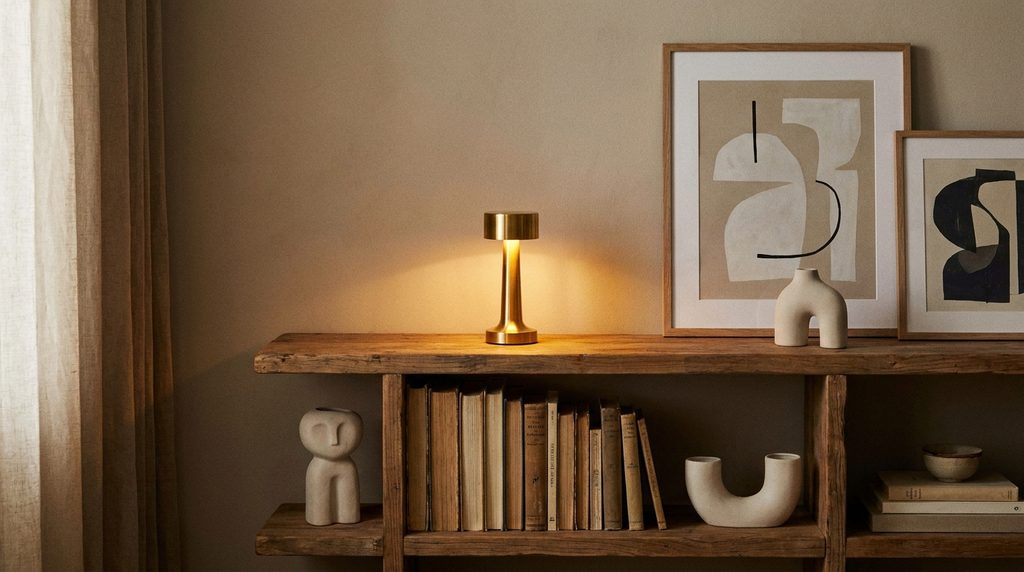
4. Architectural Accent Lights & Wall Sconces
If you want your home to evoke the atmosphere of a boutique hotel, incorporate wall-mounted lighting. Sconces draw the eye upward, emphasize architectural features, and keep tabletop surfaces clutter-free.
Creative Ways to Use Accent Sconces
- Flanking Artwork or Mirrors: Mounting sconces on either side of a large piece of art or a gilded mirror creates a museum-like focal point.
- Nook & Bedside Illumination: Swing-arm sconces above a reading nook or bedside table provide functional task lighting without taking up room on small side tables.
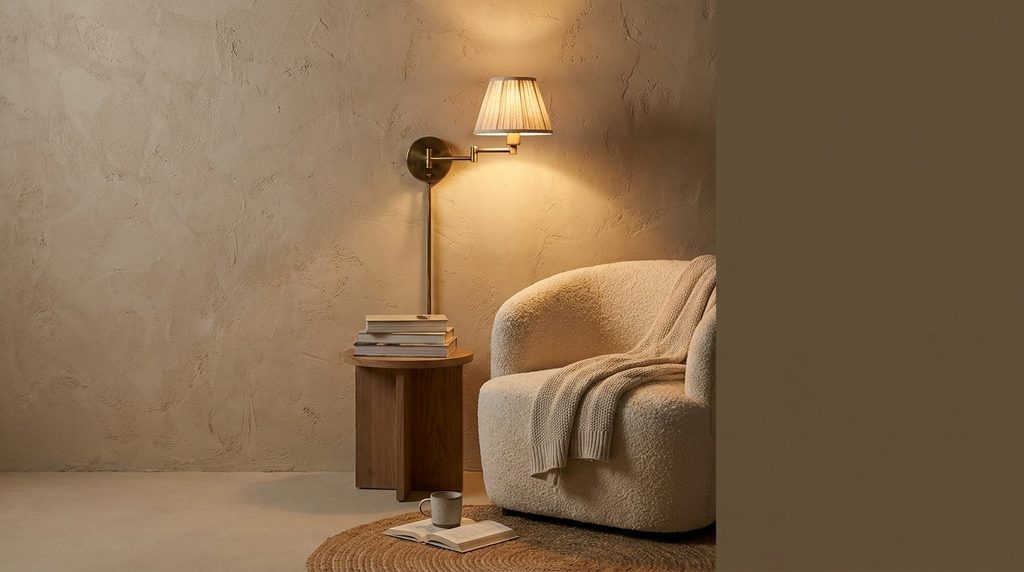
The No-Wire Rental Hacks
If you are renting or don’t want to hire an electrician to hardwire new fixtures, you can still enjoy stylish sconces:
- Plug-In Sconces with Fabric Cords: Choose fixtures with decorative woven linen or brass cords that run down the wall to a standard outlet.
- The Puck Light Trick: Mount a hardwire-style sconce directly to the wall with drywall anchors, but skip the wiring. Instead, pop an adhesive, remote-controlled LED puck light inside the shade!
5. Under-Cabinet, Shelf & Low-Level Lighting
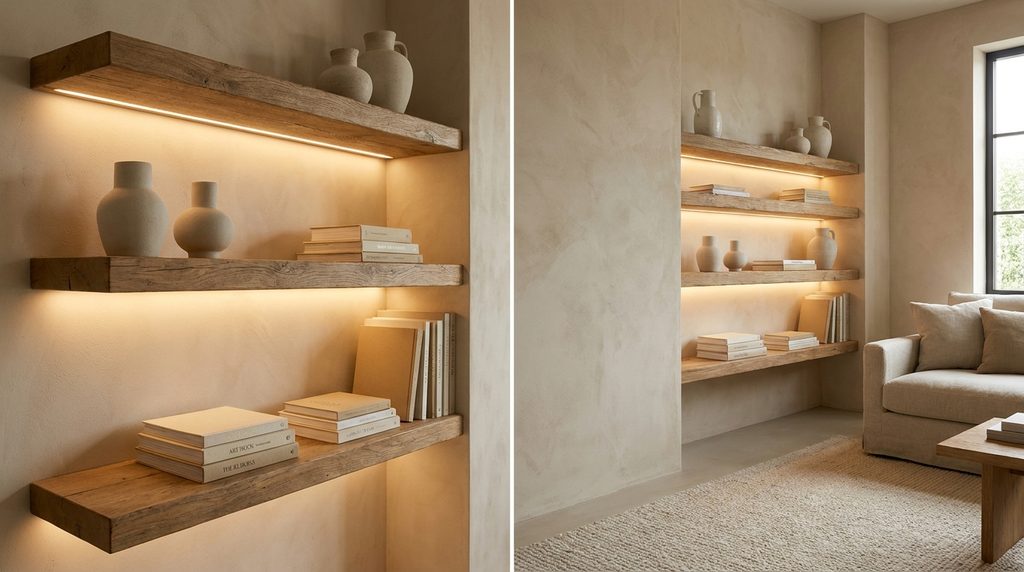
Ambient lighting shouldn’t exist only at eye level. Incorporating low-level and indirect backlighting creates subtle dimension and prevents dark, heavy shadows beneath furniture and shelving.
Illuminating Built-in Shelves & Credenzas
Placing small LED strip lights or puck lights underneath floating shelves or behind a TV console washes the wall with a gentle halo of light. This reduces eye strain while watching movies and highlights curated ceramics, books, and vintage decor.
Hidden Low-Level Glow
Placing a tiny, low-wattage floor spotlight (or a warm LED puck) behind a large potted plant—such as a Fiddle Leaf Fig, Monstera, or Olive Tree—casts shadows of leaves onto the walls and ceiling. This simple trick adds motion, texture, and organic warmth to plain walls.
6. The Candlelit Evening Ritual: Living by Natural Flame
The final layer of lighting is where true evening magic happens. No electrical light fixture can replicate the rhythmic, soothing flicker of a natural flame. The human brain is hardwired to respond to firelight with a sense of safety, calm, and rest.
As the final hour of your evening approaches, turn off most of your electric lamps and transition your home into a candlelit sanctuary.
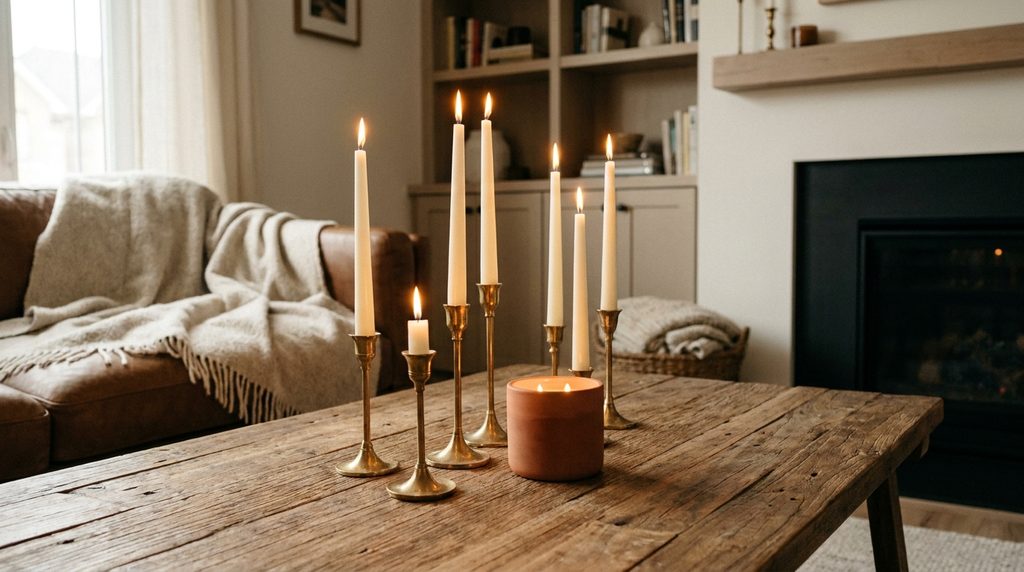
How to Style Candle Clusters
- Vary the Heights: Group brass or ceramic candlestick holders with tall taper candles alongside low pillar candles on a rustic wooden tray.
- Incorporate Natural Clay Vases: Matte terracotta or glazed stoneware candle jars introduce grounding, raw texture to coffee tables and mantels.
- Scent Selection: Pair your candlelight with grounding, natural essential oils like sandalwood, amber, cedar, or spiced vanilla to engage multiple senses at once.
Comparison: Ceiling Lighting vs. Layered Ambient Lighting
| Feature | The “Big Light” (Ceiling Fixture) | Layered Ambient Lighting |
| Color Temperature | Typically 3500K+ (Harsh, cool white) | Strictly 2200K – 2700K (Warm golden white) |
| Shadow Quality | Sharp, downward, flattens features | Soft, diffused, multi-directional |
| Emotional Impact | High-energy, alert, clinical, overwhelming | Intimate, soothing, restorative, cozy |
| Visual Depth | Eliminates contrast, washes out decor | Highlights textures, creates subtle dimension |
| Flexibility | Binary (All ON or All OFF) | Customizable based on mood and activity |
Room-by-Room Ambient Lighting Guide
To help you put these concepts into practice, here is a quick breakdown of how to layer light throughout your entire home:
1. The Living Room
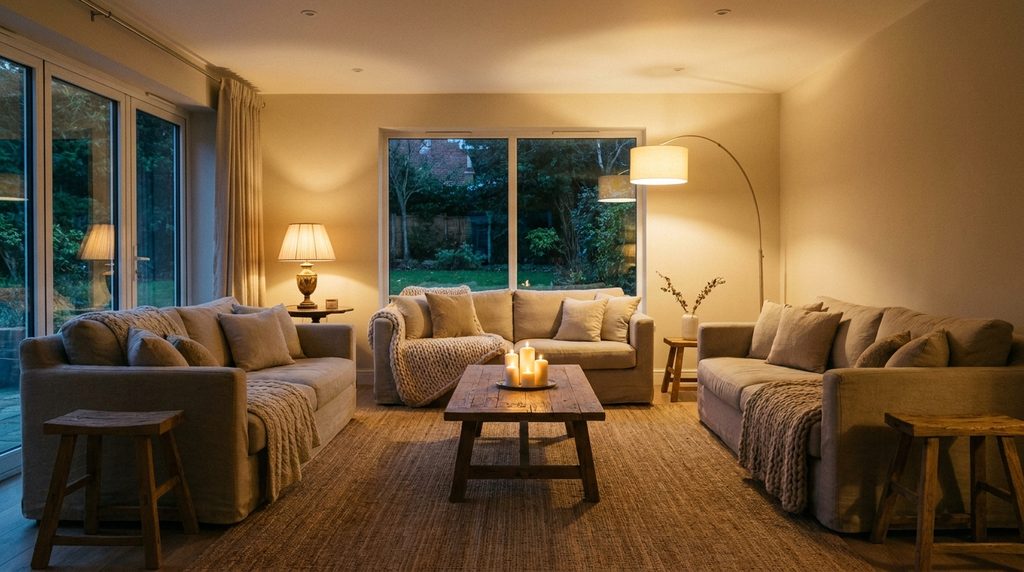
- Primary Layer: An arc floor lamp in a back corner (2700K bulb).
- Secondary Layer: Two ceramic table lamps on opposite side tables or a credenza.
- Accent Layer: A hidden plant uplight and a cluster of taper candles on the coffee table.
2. The Bedroom
- Primary Layer: A pair of dimmable wall sconces mounted beside the headboard.
- Secondary Layer: A low-wattage accent lamp (2200K) on a dresser or window sill.
- Accent Layer: Small cordless ambient lamps on nightstands for late-night reading.
3. The Kitchen & Dining Area
- Primary Layer: Warm LED under-cabinet strip lighting to illuminate countertops.
- Secondary Layer: A small rechargeable lamp sitting on the kitchen counter or island.
- Accent Layer: Brass taper candle holders down the center of the dining table for evening meals.
Final Thoughts: Your Evening Lighting Reset
Tonight, I challenge you to try a simple experiment. As twilight sets in, resist the urge to flip the main ceiling switch. Leave “The Big Light” off entirely.
Walk through your space, switch on two or three low table lamps, light a single candle, and sink into your favorite chair. Notice how quickly your shoulders drop, how much quieter your mind feels, and how your living space transforms into a warm, inviting refuge from the outside world.
What is your favorite way to light your home in the evening? Are you ready to banish the big light for good? Let’s chat in the comments below!
